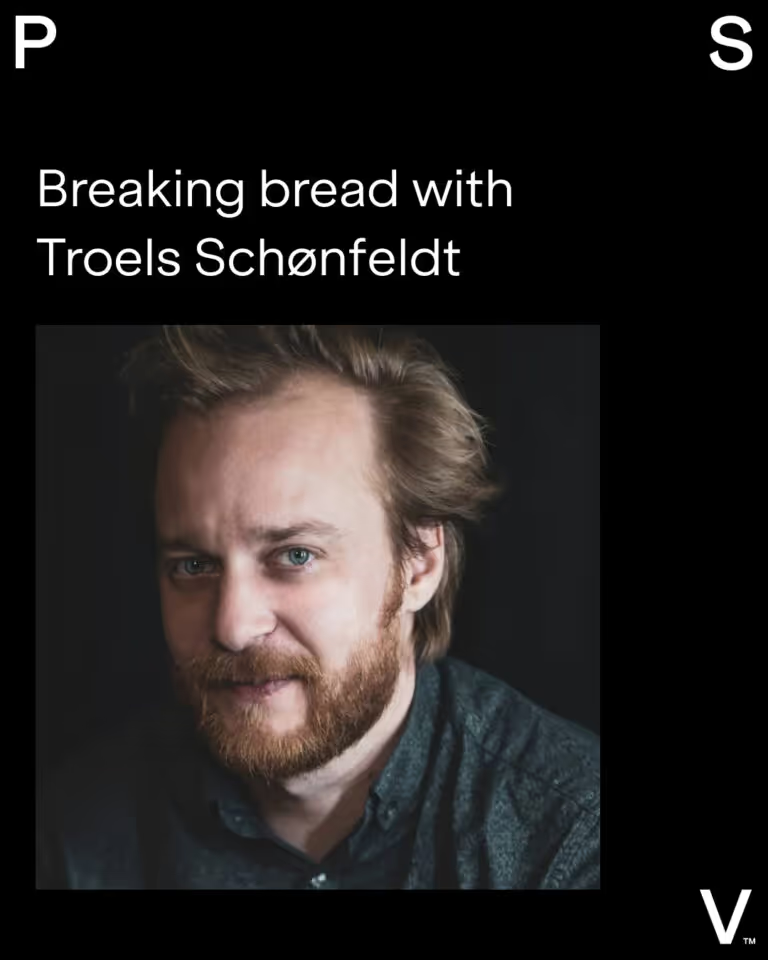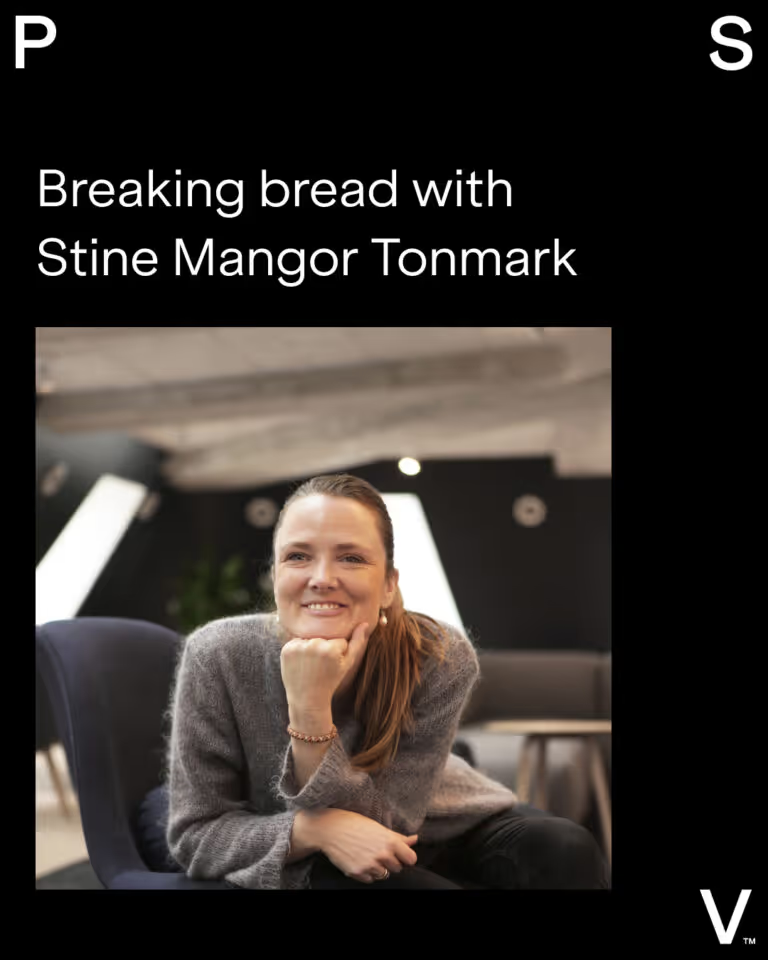

Building a startup is not for the faint hearted and you already have one exit under your belt. How come you are doing it all over again?
Mikkel With HelloFlow we never actually sat down and planned to build a startup. It all just happened naturally as a product of how Ciprian (Cip) and I work together. When we met in 2016 at Nets I found a partner in crime who can do all the things that I can’t and vice verca – or at least I try. Both Cip and I can get deeply obsessed with solving a problem. First, it was onboarding with HelloFlow, and now we’re onto due diligence with spektr. And then it’s also an advantage that we’re quite “naive” people. I think you have to be when building a startup. We’re intrigued by risk and curious to see what happens if we give it our best shot.
Cip My reason for this continued collaboration with Mikkel comes from our meeting in Nets. Together we worked on all kinds of products ranging from payment products to building machines that work on blockchains. Today, I continue to live the dream of creating little products and scaling them up. Going from zero to something in good company is truly what inspires me.

A whopping exit + starting a new company sometimes equals bootstrapping. How come you’re bringing in external capital this time?
Mikkel With our ambitions of taking spektr far, it makes the most sense to bring in external capital. Back when we began building spektr in April 2023, we funded the project out of our own pockets, which quickly got us up and running with a team of roughly ten people. We’ve used our exit from HelloFlow as fuel to get us from zero to one, and now we use outside money to help us keep up the pace. In order to build and scale spektr fast we need external capital help as a tool to double down on team and getting all the resources on board much faster than we would be able to ourselves. Additionally, the combined investment power from Seedcamp, Northzone and PSV also brings much more to the table than just cool cash.
A fast-running startup needs funding and as you know, it comes in all shapes and sizes. What does your ideal investor look like?
Mikkel There’s not one good answer to this question as it deeply depends on personal preferences and chemistry. When embarking on a 5-10 year journey with investors, you better pick some that you would enjoy sharing a beer with. We were lucky to have several offers on hand, but knowing both the personalities of Alexander (PSV) and Tom (Seedcamp) from the HelloFlow days made the choice easy and less risky for us. Dominik and Maxine (Northzone) are new to us, but showed great commitment and interest in spektr by traveling to Copenhagen several times before any agreement was made. We choose investors based on their commitments and the genuineness of our connection.
When someone is waving a big, fat check in front of you, it can be hard to say no. What are your thoughts on a potential second exit?
Cip It might sound like a cliché but building spektr is truly like living our dream. Turning something from zero into something big is what both Mikkel and I are passionate about. With this project our focus isn’t on selling and it would be a big mistake to do it too early. This time, we’re in it for the long haul and have no plans of exiting anytime soon.
Mikkel Let’s be honest. Both Cip and I have probably bought all the toys, drones and games we could ever dream of. At this point I believe that I have three drones and I can’t imagine to buy any more. When we sold HelloFlow, I was 26 and Cip was 28. Now I’m 28 and Cip is 31 so we’re both still fairly young. Cashing in through an exit isn’t really our motivation. We’re much more driven by our dream of building something big. To be live in several markets and see customers all over using our product is what truly motivates us.
They say that your first 10 employees are definitive for the future of your startup. How do you go about hiring?
Mikkel The overall theme for the culture of spektr is “maturity”. We ventured into building HelloFlows very young with no experience and corporate backgrounds. We didn’t know what a startup was at first, but found out underway. The biggest difference from then and now, is that we’ve brought in two additional founders. One is called Jan-Erik and was by far the highest converting salesperson we had at HelloFlow and another one is the former head of data at HelloFlow, Jeremy. Together we’ve brought in people that we’ve worked with or people who just simply fit our company culture. That has brought us around 20 highly skilled people that are all best-in-class at what they do. From the very beginning we’ve been searching for self-leading people that take ownership of their work. As founders, it’s immensely important to admit your short-comings and to trust the skills of your employees 100%. I’m proud to say that everyone in our team is a master of their craft, so there’s no need for us to second guess their decisions.
Cip We’ve chosen competencies over convenience. With my roots in Romania, we’ve gotten access to some of the very best developers. Just because someone is sitting somewhere else, it shouldn’t be a reason for you to miss out on their skills. We support a united culture in spektr by getting the team together either in Romania or in Copenhagen. And then focus on discussing things with the whole team.
Mikkel Without posing as an expert, I believe there are two versions of company culture. Firstly, everyone needs to believe in the same vision and to be on the same page of strategy. And then there’s the unique cultural contribution of every employee. People have different ways of working, different ways of thinking and different ways of operating – and that’s all perfect. As long as we’re seeing eye to eye on the bigger scale and working towards the same goal.
A co-founder partnership has very high highs and very low lows. What is your secret sauce to staying intact?
Mikkel It obviously varies from all founder partnerships. What is fundamental in our case is that we all have experience from working together. Cip and I have worked together since 2016. I’ve worked with Jeremy and Erik since 2018. And the four of us have worked together since 2020. In addition to our experience of collaborating, we’re value celebrating both highs and lows. We have a secret place in Copenhagen where we go to sob but also to high-five. It doesn’t matter whether we lost or won a client – it’s all equally good reason to sit back and reflect for a moment.
Startup life is like a roller-coaster ride. It’s ups and downs, lefts and rights. How do you rediscover momentum?
Cip It’s about knowing your team. We spend a lot of time getting know the people that we work with. As founders and leaders of teams, we need to be familiar with the individual traits of our employees to communicate effectively and to keep them excited through rough times.
Mikkel We have the pleasure of working with people that are both extremely skilled and highly self-leading. We experience all members of our team pushing the wave of momentum themselves in many cases. Sometimes something works really, really well marketing-wise and sometimes we’re challenged in other places. We support each other through the ups and downs because at the end of the day we as a team share these experiences. We have a strong culture in constantly sharing what’s happening – both in our founder team but also more broadly.
Every single VC in this world is in love with second-time founders. How do you apply your experience when building spektr?
Cip I apply my experience from building HelloFlow every day as we build spektr. My experience has taught me many things about what we need, when we need it, and what it takes to build it. I can better navigate in this field of trade-off engineering as I’ve grown much stronger in my execution power on product matters.
Mikkel When we built HelloFlow we had to learn all these new things that were out of our field of competence. Cip is a backend developer by heart, but had to learn everything frontend. And while I’m anything but a salesperson, I had to learn myself how to effectively close deals. This time around we have a team around us with people that are experts in all the fields required to succeed. Our experience also helped us skip trivial pitfalls and enabled us to lay out a more powerful go-to-market strategy. This time we can focus our energy and efforts much more accurately into what truly brings value to the project.